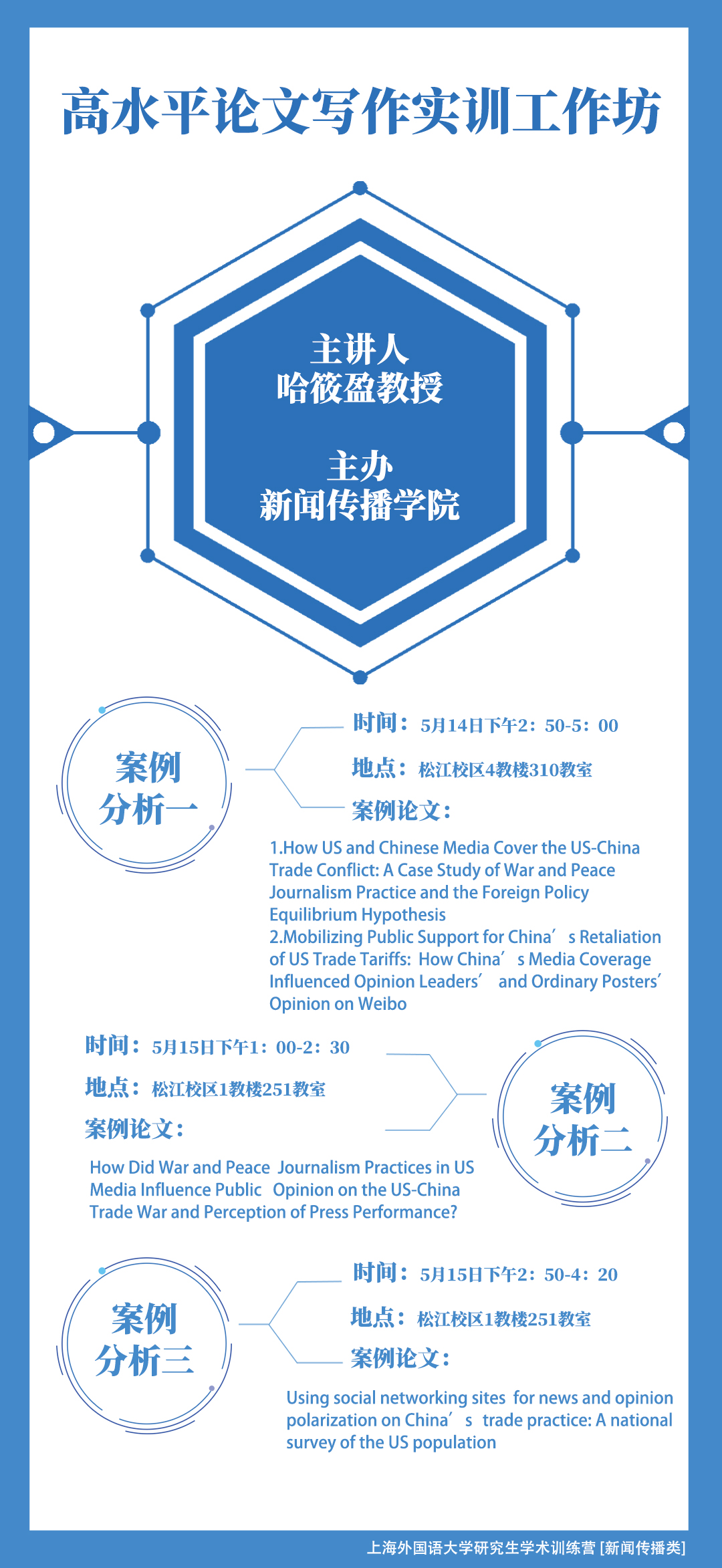
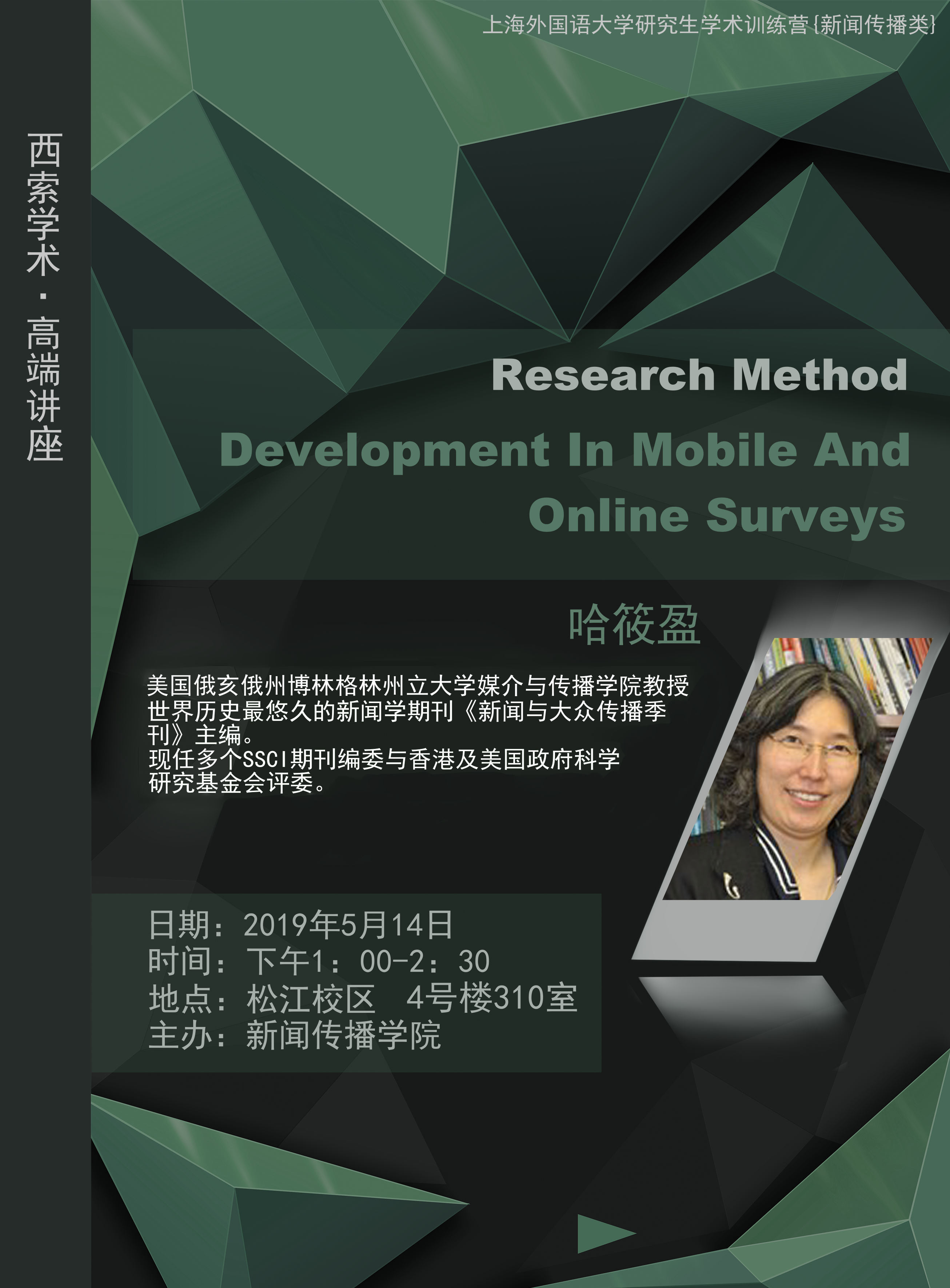
案例分析一:
5月14日,周二下午:2:50-5:00
松江校区4教楼310室
案例论文:
1.How US and Chinese Media Cover the US-China Trade Conflict: A Case Study of War and Peace Journalism Practice and the Foreign Policy Equilibrium Hypothesis
2.Mobilizing Public Support for China’s Retaliation of US Trade Tariffs: How China’s Media Coverage Influenced Opinion Leaders’ and Ordinary Posters’ Opinion on Weibo
案例分析二
时间:5月15日周三下午1点-2:30
地点:松江校区1教楼251教室
案例论文:How Did War and Peace Journalism Practices in US Media Influence Public Opinion on the US-China Trade War and Perception of Press Performance?
案例分析三
时间:5月15日周三下午2:50-4:20
地点:松江校区1号楼251教室
案例论文:Using social networking sites for news and opinion polarization on China’s trade practice: A national survey of the US population