主讲人
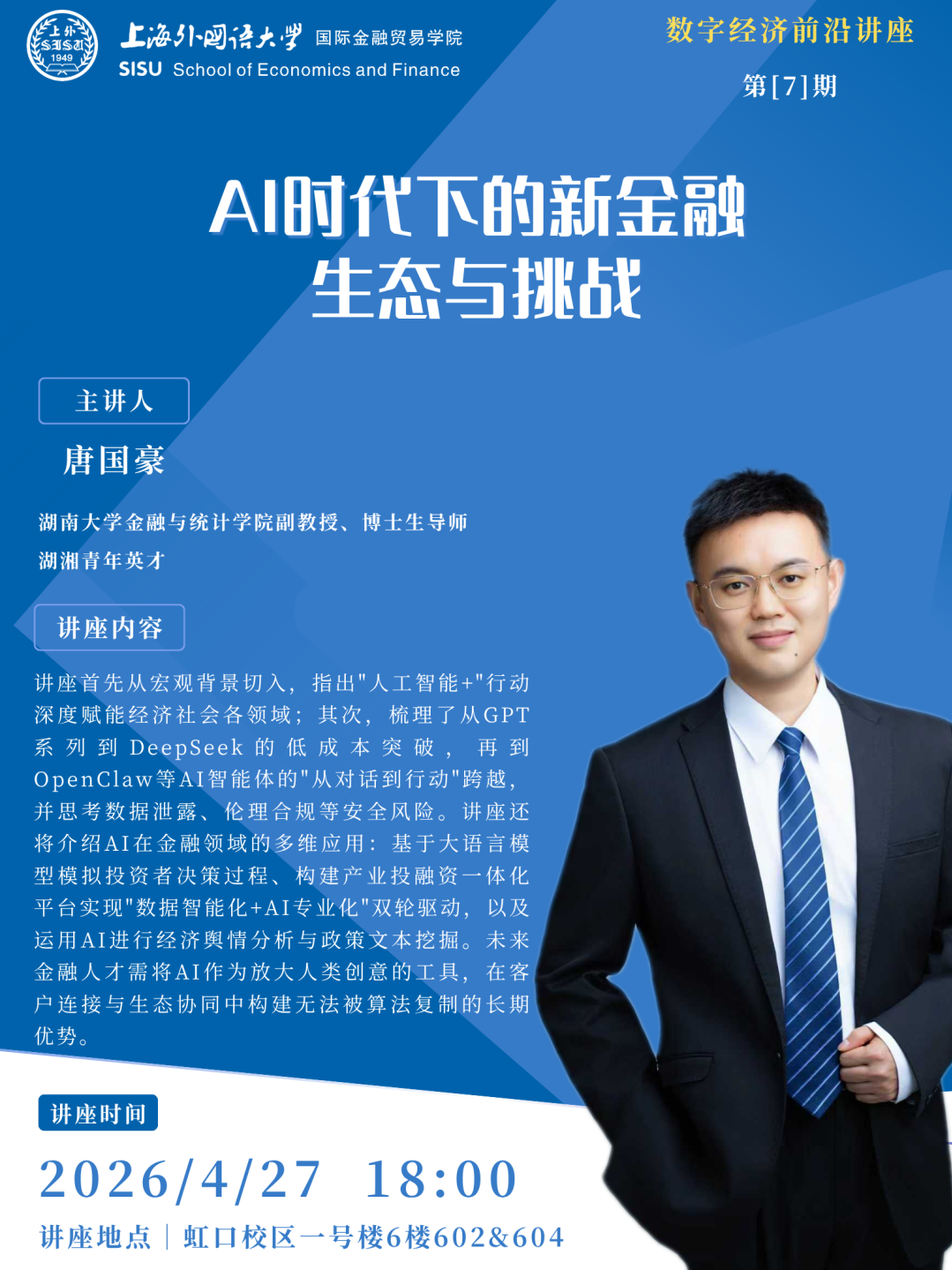
唐国豪
开始时间
2026年04月27日(周一)18:00
结束时间
2026年04月27日(周一)21:00
地点
虹口校区-1号楼-602&604
主办方
国际金融贸易学院
承办方
国际金融贸易学院
语言
汉语

内容提要
讲座首先从宏观背景切入,指出"人工智能+"行动深度赋能经济社会各领域;其次,梳理了从GPT系列到DeepSeek的低成本突破,再到OpenClaw等AI智能体的"从对话到行动"跨越,并思考数据泄露、伦理合规等安全风险。讲座还将介绍AI在金融领域的多维应用:基于大语言模型模拟投资者决策过程、构建产业投融资一体化平台实现"数据智能化+AI专业化"双轮驱动,以及运用AI进行经济舆情分析与政策文本挖掘。未来金融人才需将AI作为放大人类创意的工具,在客户连接与生态协同中构建无法被算法复制的长期优势。
人物简介
唐国豪
现任湖南大学金融与统计学院副教授、博士生导师,金融科技与工程系副主任,湖湘青年英才,湖南大学马克思主义学院双聘思政教师。主持国家自然科学基金、教育部人文社科基金、湖南省自然科学基金、湖南省教学改革一般项目等多个课题。主要从事金融科技与金融机器学习、中国特色的金融大数据分析研究。目前已在Journal of Financial and Quantitative Analysis, Journal of Banking & Finance, Journal of Economic Dynamics and Control, Journal of International Money and Finance和《管理世界》《管理科学学报》《金融研究》《经济学(季刊)》《经济学动态》等国内外重要期刊发表论文。智库服务研究获得党和国家领导人,省委省政府主要领导批示等。作为主编之一,编写了《金融与财务机器学习》教材。
新闻报道
暂无新闻报道